German goulash is a cold-weather classic that brings warmth to the table with its deep flavor and hearty texture. This creamy version keeps all the rich paprika notes you expect, then finishes with a velvety swirl that makes the sauce extra lush. It’s the kind of dish that smells amazing as it simmers and tastes even better the next day.
Serve it with noodles, potatoes, or a hunk of crusty bread, and you’ve got a comforting meal everyone will ask for again.
Table of Contents
Why This Recipe Works
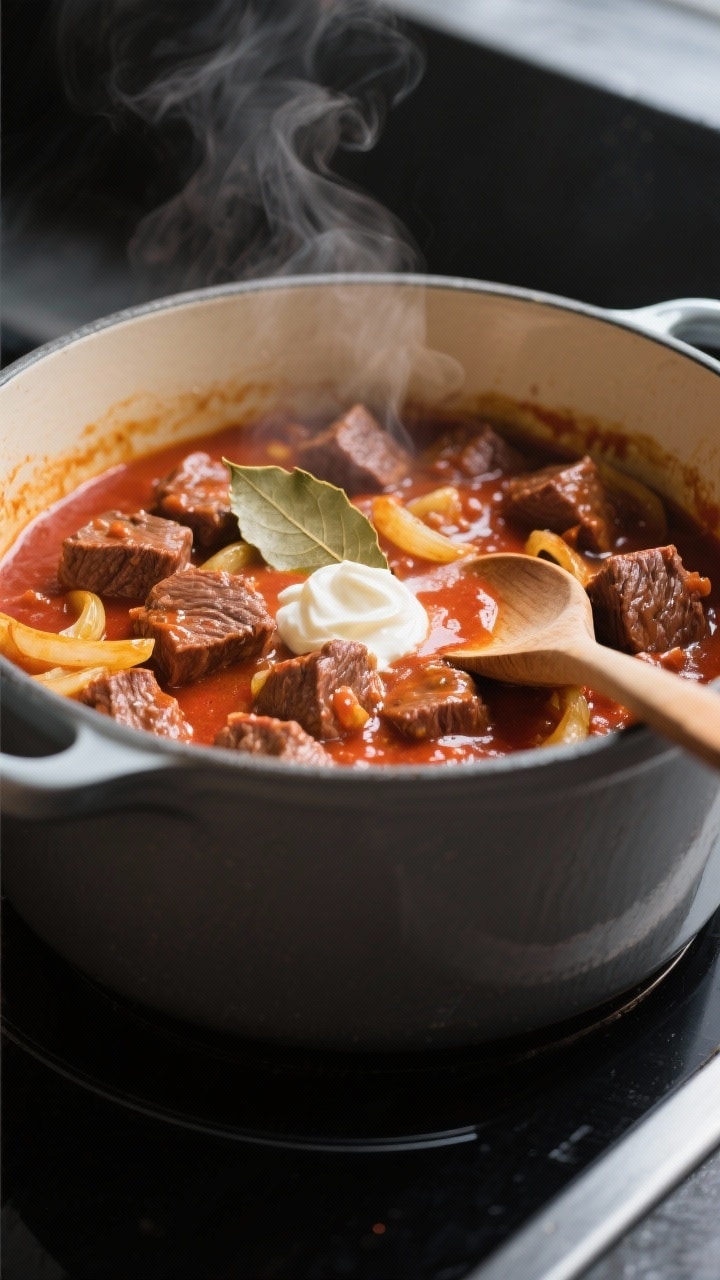
This creamy German goulash builds flavor in layers, starting with well-browned beef and slow-cooked onions. The paprika blend gives a sweet, smoky backbone, while tomato paste adds depth without turning it into a tomato-heavy stew. Beef stock and a long simmer keep the meat tender and the sauce robust.
The final touch—cream or crème fraîche—adds a silky finish that balances the spices and rounds out the flavor.
- Balanced paprika: A mix of sweet and smoked paprika creates warmth without heat.
- Low and slow simmer: Tenderizes the beef and melds flavors.
- Creamy finish: A small amount of dairy softens acidity and makes the sauce luxurious.
- Make-ahead friendly: Tastes even better after resting overnight.
What You’ll Need
- 2 pounds (900 g) beef chuck, cut into 1- to 1.5-inch cubes
- 2 tablespoons neutral oil (canola, sunflower, or vegetable)
- 2 large yellow onions, thinly sliced
- 3 cloves garlic, minced
- 2 tablespoons tomato paste
- 2 tablespoons sweet paprika
- 1 teaspoon smoked paprika (optional but recommended)
- 1 teaspoon caraway seeds, lightly crushed
- 1 teaspoon dried marjoram (or oregano)
- 1 teaspoon kosher salt, plus more to taste
- 1/2 teaspoon black pepper
- 3 cups (700 ml) beef stock (low sodium)
- 1 bay leaf
- 1/2 cup (120 ml) heavy cream or crème fraîche
- 1 tablespoon flour or cornstarch (optional, for thickening)
- 1 tablespoon apple cider vinegar or lemon juice (to brighten, optional)
- Fresh parsley, chopped, for garnish
- To serve: Egg noodles, spätzle, mashed potatoes, or crusty bread
How to Make It
- Prep the beef: Pat the beef dry with paper towels and season with salt and pepper. Dry meat browns better and builds flavor.
- Brown in batches: Heat oil in a heavy pot over medium-high. Sear the beef in batches until well browned on two sides.
Don’t crowd the pan. Transfer to a plate.
- Soften the onions: Reduce heat to medium. Add onions with a pinch of salt.
Cook 10–12 minutes, stirring often, until soft and golden. You want sweetness, not char.
- Build the base: Stir in garlic and tomato paste. Cook 1–2 minutes until the paste darkens slightly and smells toasty.
- Spice it right: Add sweet paprika, smoked paprika, caraway, and marjoram.
Stir for 30 seconds to bloom the spices.
- Deglaze: Pour in a splash of stock and scrape up browned bits. Return the beef and any juices to the pot.
- Add liquid and simmer: Add remaining stock and bay leaf. Bring to a gentle simmer, then reduce heat to low.
Cover and cook 1.5 to 2 hours, stirring occasionally, until the beef is tender.
- Adjust thickness: If the sauce seems thin, simmer uncovered for 10–15 minutes. For extra body, whisk flour or cornstarch with a little cold water, then stir into the pot and simmer a few minutes.
- Finish creamy: Remove the bay leaf. Stir in cream or crème fraîche.
Taste and adjust salt. Add a splash of vinegar or lemon juice if you want a brighter finish.
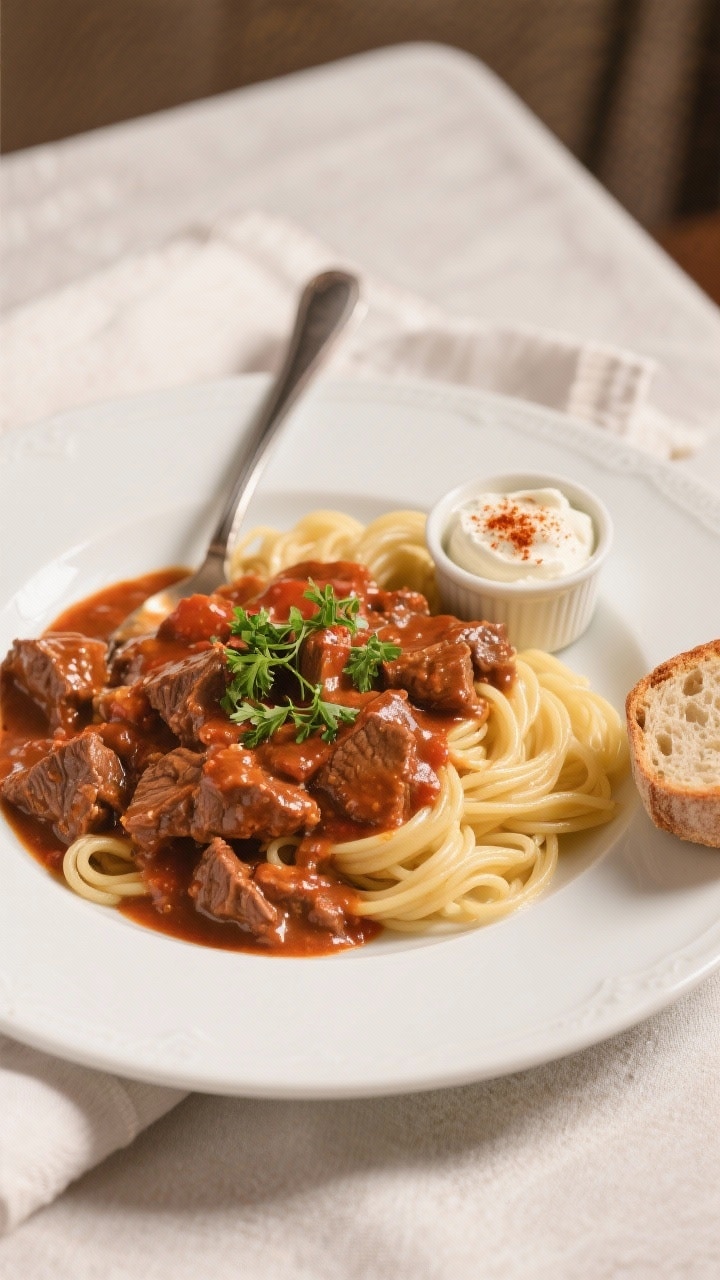
- Serve: Spoon over egg noodles, spätzle, or potatoes. Garnish with parsley.
The sauce should be glossy and cling to the meat and noodles.
How to Store
- Fridge: Cool completely, then store in an airtight container for up to 4 days.
- Freezer: Freeze for up to 3 months. For best texture, add the cream after reheating if you plan to freeze.
- Reheat: Warm gently on the stove over low heat, adding a splash of stock or water if the sauce thickens too much.
Benefits of This Recipe
- Comforting and filling: A bowl of cozy, savory flavor that satisfies on its own.
- Budget-friendly: Uses beef chuck, onions, and pantry spices for big impact at a reasonable cost.
- Meal-prep friendly: Improves with time, making leftovers a highlight.
- Flexible serving options: Works with noodles, potatoes, rice, or bread.
- Balanced flavor: Cream rounds out the paprika and gives a smooth finish.
Pitfalls to Watch Out For
- Skipping the sear: Browning the beef is crucial for depth. Pale meat means a flat sauce.
- Burning the paprika: Add spices after the onions soften and keep it brief.
Burnt paprika tastes bitter.
- Boiling too hard: A rolling boil toughens the meat. Keep it at a gentle simmer.
- Adding dairy too early: Stir in cream at the end to avoid curdling and separation.
- Over-thickening: The sauce should be silky, not pasty. Use thickener sparingly.
Variations You Can Try
- Mushroom goulash: Add 8 oz (225 g) sliced cremini mushrooms with the onions for extra umami.
- Paprika-forward: Use 100% sweet Hungarian paprika and skip the smoked for a classic profile.
- Beer-braised: Swap 1 cup of stock for a malty lager to deepen the sauce.
- Sour cream swirl: Replace heavy cream with sour cream for a tangier finish.
Temper with a little hot sauce from the pot before stirring in.
- Vegetable boost: Add diced red bell pepper or carrots during the simmer for sweetness and color.
- Pork version: Use pork shoulder instead of beef for a slightly lighter, tender result.
- Spätzle topping: Finish with butter-toasted breadcrumbs for a German touch and texture.
FAQ
What’s the difference between German and Hungarian goulash?
German goulash typically leans more onion-forward and may include a touch of tomato paste and herbs like marjoram. Hungarian goulash often uses a heavier hand with paprika and skips the creamy finish. This recipe keeps the German style but adds a modern creamy twist.
Can I make this in a slow cooker?
Yes.
Brown the beef and sauté the onions and spices on the stove first, then transfer to a slow cooker with the stock and bay leaf. Cook on low for 7–8 hours or high for 4–5 hours. Stir in the cream at the end.
What cut of beef works best?
Beef chuck is ideal because it becomes tender and flavorful with slow cooking.
Avoid very lean cuts like round; they can turn dry and tough.
How do I keep the sauce from curdling?
Keep the heat low when adding the cream and stir it in off the heat if you’re worried. If using sour cream, temper it by whisking in a little hot liquid from the pot first.
Can I make it gluten-free?
Yes. Use cornstarch instead of flour to thicken, and confirm your stock and spices are certified gluten-free.
Serve with potatoes or rice.
What should I serve it with?
Egg noodles and spätzle are classic. Mashed or boiled potatoes, buttered rice, or crusty bread also work well to soak up the sauce.
Is it spicy?
No, it’s more warm and smoky than hot. If you like heat, add a pinch of hot paprika or chili flakes to taste.
Can I add vegetables without changing the flavor too much?
Yes.
Carrots, mushrooms, or red bell peppers blend nicely with the base flavors. Add them during the onion stage so they soften and integrate.
Final Thoughts
Creamy German goulash brings everything you want from a cozy stew—deep flavor, tender beef, and a sauce you’ll want to chase with bread. It’s simple to make, forgiving, and easy to adapt to your taste.
Make a big pot on the weekend, and you’ll have satisfying meals for days. Once you try the creamy finish, you might not go back. Enjoy it your way, with your favorite sides, and let the pot do the work.
Ingredients

Instructions
- Prep the beef: Pat the beef dry with paper towels and season with salt and pepper. Dry meat browns better and builds flavor.
- Brown in batches: Heat oil in a heavy pot over medium-high. Sear the beef in batches until well browned on two sides. Don’t crowd the pan. Transfer to a plate.
- Soften the onions: Reduce heat to medium. Add onions with a pinch of salt. Cook 10–12 minutes, stirring often, until soft and golden. You want sweetness, not char.
- Build the base: Stir in garlic and tomato paste. Cook 1–2 minutes until the paste darkens slightly and smells toasty.
- Spice it right: Add sweet paprika, smoked paprika, caraway, and marjoram. Stir for 30 seconds to bloom the spices.
- Deglaze: Pour in a splash of stock and scrape up browned bits. Return the beef and any juices to the pot.
- Add liquid and simmer: Add remaining stock and bay leaf. Bring to a gentle simmer, then reduce heat to low. Cover and cook 1.5 to 2 hours, stirring occasionally, until the beef is tender.
- Adjust thickness: If the sauce seems thin, simmer uncovered for 10–15 minutes. For extra body, whisk flour or cornstarch with a little cold water, then stir into the pot and simmer a few minutes.
- Finish creamy: Remove the bay leaf. Stir in cream or crème fraîche. Taste and adjust salt. Add a splash of vinegar or lemon juice if you want a brighter finish.
- Serve: Spoon over egg noodles, spätzle, or potatoes. Garnish with parsley. The sauce should be glossy and cling to the meat and noodles.