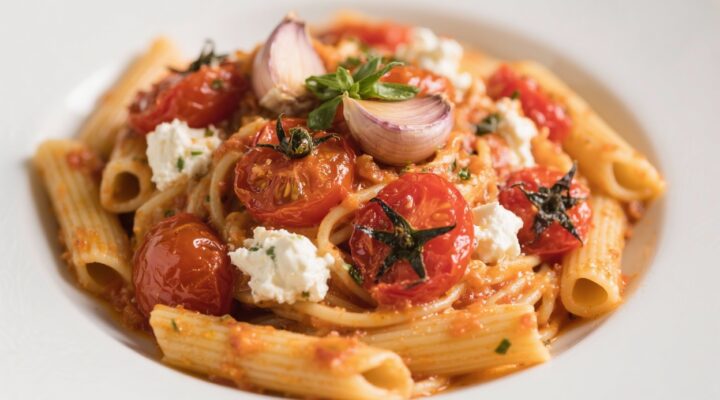
Caramelized onion and garlic spaghetti is one of those meals that tastes like you spent hours on it, but it’s surprisingly simple. Slowly cooked onions turn sweet and silky, while golden garlic adds a gentle kick. A splash of pasta water brings everything together into a glossy sauce that hugs the noodles.
It’s budget-friendly, pantry-friendly, and satisfying without feeling heavy. Make it for a weeknight dinner or dress it up for guests it works every time.
Table of Contents
What Makes This Recipe So Good
- Deep, rich flavor from simple ingredients: Caramelized onions and toasted garlic create a savory-sweet base that tastes complex without much effort.
- Comforting and light: No cream needed. The starchy pasta water and olive oil form a silky sauce that coats every strand.
- Flexible and forgiving: Add herbs, chili flakes, lemon, or cheese.It’s easy to tweak based on what you have.
- Budget-friendly: Onions, garlic, pasta, and olive oil are inexpensive staples that deliver big flavor.
- Great for meal prep: Caramelized onions can be made ahead and frozen or refrigerated, cutting cook time later.
Ingredients
- 12 ounces spaghetti (or your favorite long pasta)
- 3 large yellow onions, thinly sliced
- 6 cloves garlic, thinly sliced
- 4 tablespoons extra-virgin olive oil, divided
- 2 tablespoons unsalted butter (optional but recommended)
- 1 teaspoon kosher salt, plus more for pasta water
- Freshly ground black pepper, to taste
- 1/2 teaspoon red pepper flakes (optional for heat)
- 1/2 cup dry white wine or low-sodium vegetable/chicken broth (optional)
- 1 teaspoon balsamic vinegar or a squeeze of lemon juice (to brighten)
- 1/2 cup finely grated Parmesan or Pecorino Romano, plus more for serving
- 1/4 cup chopped fresh parsley (optional)
Instructions

- Prep the onions and garlic: Peel and thinly slice the onions into half-moons. Slice the garlic as evenly as possible so it cooks at the same rate.
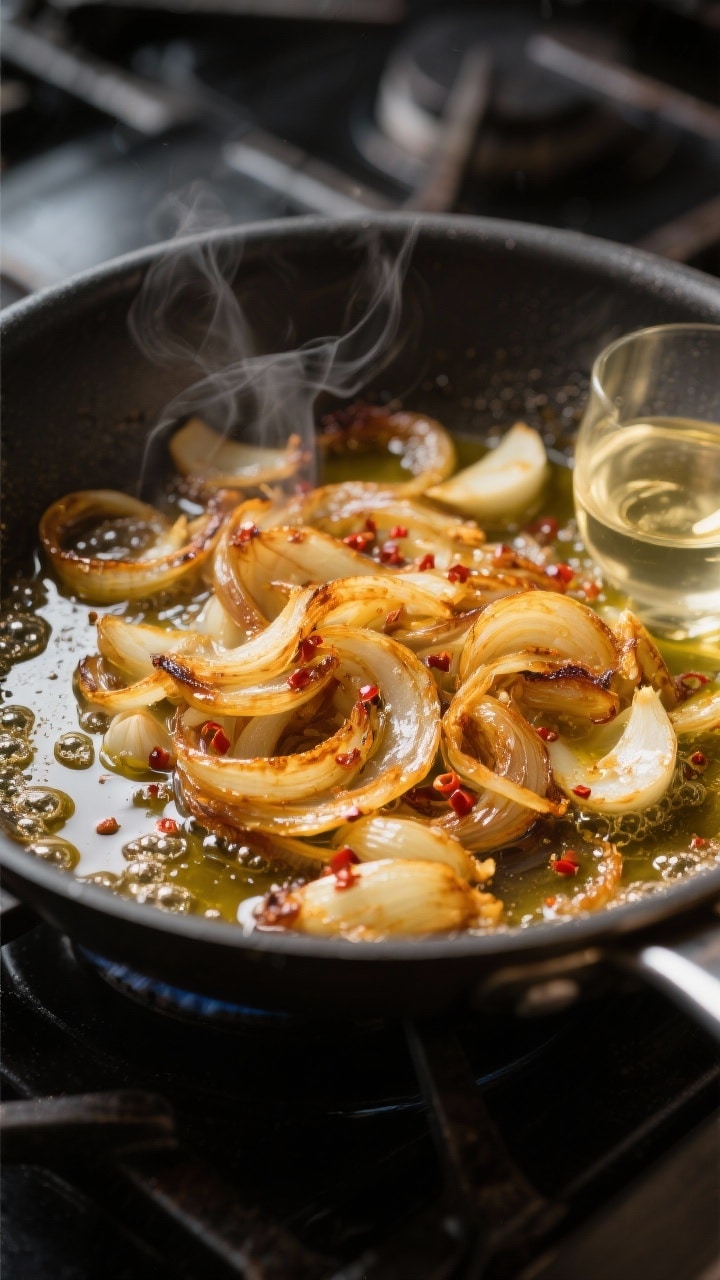
- Start the caramelization: In a large, wide skillet, heat 2 tablespoons olive oil over medium-low heat. Add onions and 1 teaspoon salt.Cook slowly, stirring every few minutes, until they turn soft and golden, about 25–35 minutes. If they brown too quickly, lower the heat and add a splash of water to deglaze.
- Add garlic and build flavor: Push onions to the edges. Add the remaining 2 tablespoons olive oil to the center and toss in the garlic.Cook 1–2 minutes until fragrant and lightly golden. Stir everything together.
- Deglaze (optional but great): Pour in white wine or broth. Scrape up any browned bits and let the liquid reduce by half, 2–3 minutes.Stir in butter if using for extra richness.
- Boil the pasta: While onions cook, bring a large pot of well-salted water to a boil. Cook spaghetti until just shy of al dente. Reserve 1–1.5 cups of pasta water before draining.
- Emulsify the sauce: Add the drained pasta to the onion mixture.Sprinkle in 1/2 cup of reserved pasta water and toss vigorously over medium heat until glossy and coated. Add more water as needed to create a silky sauce.
- Season and finish: Stir in red pepper flakes, black pepper, and balsamic or lemon juice. Off the heat, toss with Parmesan until melted and creamy.Adjust salt to taste.
- Garnish and serve: Top with extra cheese and chopped parsley. Serve immediately while hot and silky.
Keeping It Fresh
- Make-ahead onions: Caramelize a big batch and refrigerate for up to 5 days or freeze for up to 2 months. Reheat gently with a splash of water or broth.
- Storage: Leftover spaghetti keeps in an airtight container for 3–4 days.Add a spoonful of water when reheating to revive the sauce.
- Reheat tips: Warm on the stovetop over low heat, stirring and adding small amounts of water or broth until glossy again. Avoid microwaving on high; go in short bursts with stirring in between.
- Brighten before serving: A fresh squeeze of lemon or a dusting of cheese perks up leftovers.
Health Benefits
- Onions and garlic bring antioxidants: They’re rich in quercetin and allicin, compounds linked to heart health and immune support.
- Olive oil provides healthy fats: Extra-virgin olive oil delivers monounsaturated fats that support heart health and help you feel satisfied.
- Balanced comfort: Pairing pasta with fiber from onions and protein from cheese can help steady energy and keep you full.
- Customizable for dietary needs: Choose whole-wheat or legume pasta to boost fiber and protein, or go gluten-free with rice or corn-based spaghetti.
Pitfalls to Watch Out For
- Rushing the onions: True caramelization takes time. High heat will burn them before they sweeten.Keep it low and slow.
- Over-browning the garlic: Garlic turns bitter quickly. Add it after the onions have softened and watch closely.
- Skipping the pasta water: That starchy liquid is key to a silky sauce. Reserve more than you think you’ll need.
- Underseasoning: Onions are sweet, so you need enough salt, pepper, and acid (balsamic or lemon) to balance.
- Cheese clumping: Take the pan off the heat before adding cheese and toss well to melt it evenly.
Alternatives
- Vegan: Skip the butter and cheese.Add a splash more olive oil and a spoonful of nutritional yeast for savoriness. Toasted breadcrumbs make a great topping.
- Gluten-free: Use gluten-free spaghetti and check your broth if using. The technique is the same.
- Protein boost: Add white beans, grilled chicken, or sautéed mushrooms.Toss them in with the onions near the end.
- Herb variations: Fresh thyme or rosemary adds earthiness; basil or chives add freshness. Stir in at the end to keep flavors bright.
- Heat and crunch: Finish with chili oil, toasted pine nuts, or crispy fried shallots for texture.
- Creamy twist: Swirl in a spoonful of mascarpone or ricotta off the heat for extra lushness.
FAQ
Can I caramelize the onions faster?
True caramelization needs time. You can speed slightly by adding a small pinch of sugar and a splash of water to help them soften, but keep the heat medium-low to avoid burning.
What’s the best onion for this recipe?
Yellow onions are classic for balance of sweetness and savoriness.
Sweet onions work too, but you may need a touch more salt and acid to keep the sauce from tasting overly sweet.
Do I have to use wine?
No. Broth or even water works for deglazing. Wine adds depth, but you’ll still get great flavor from the onions, garlic, and olive oil.
How do I keep the garlic from burning?
Slice it evenly, add it after the onions are soft, and cook over low heat for just 1–2 minutes.
If the pan looks dry, add a drizzle of oil.
Can I use another type of pasta?
Yes. Bucatini, linguine, or fettuccine are great. Short shapes like rigatoni work too, though the silky sauce shines with long strands.
Is this good without cheese?
Absolutely.
It’s still flavorful and satisfying. To replace the savory hit from cheese, add nutritional yeast or a few capers for briny depth.
How salty should the pasta water be?
It should taste like the sea. This seasons the pasta from within and reduces the need for extra salt later.
What can I do if the sauce seems dry?
Add more reserved pasta water a little at a time and toss vigorously.
The starch will bring the sauce back to a glossy, creamy texture.
Final Thoughts
Caramelized Onion & Garlic Spaghetti proves that simple ingredients can create a big, memorable flavor. With a little patience for the onions and a splash of starchy pasta water, you end up with a silky, comforting dish that never feels heavy. Keep it classic, or make it your own with herbs, chili flakes, or a creamy finish.
It’s reliable, unfussy, and always satisfying—exactly the kind of recipe you’ll cook again and again.
Caramelized Onion & Garlic Spaghetti - Simple, Comforting, and Packed With Flavor
Ingredients

Instructions
- Prep the onions and garlic: Peel and thinly slice the onions into half-moons. Slice the garlic as evenly as possible so it cooks at the same rate.
- Start the caramelization: In a large, wide skillet, heat 2 tablespoons olive oil over medium-low heat. Add onions and 1 teaspoon salt. Cook slowly, stirring every few minutes, until they turn soft and golden, about 25–35 minutes. If they brown too quickly, lower the heat and add a splash of water to deglaze.
- Add garlic and build flavor: Push onions to the edges. Add the remaining 2 tablespoons olive oil to the center and toss in the garlic. Cook 1–2 minutes until fragrant and lightly golden. Stir everything together.
- Deglaze (optional but great): Pour in white wine or broth. Scrape up any browned bits and let the liquid reduce by half, 2–3 minutes. Stir in butter if using for extra richness.
- Boil the pasta: While onions cook, bring a large pot of well-salted water to a boil. Cook spaghetti until just shy of al dente. Reserve 1–1.5 cups of pasta water before draining.
- Emulsify the sauce: Add the drained pasta to the onion mixture. Sprinkle in 1/2 cup of reserved pasta water and toss vigorously over medium heat until glossy and coated. Add more water as needed to create a silky sauce.
- Season and finish: Stir in red pepper flakes, black pepper, and balsamic or lemon juice. Off the heat, toss with Parmesan until melted and creamy. Adjust salt to taste.
- Garnish and serve: Top with extra cheese and chopped parsley. Serve immediately while hot and silky.